THE WINTER OLYMPICS: IT’S ABOUT THE STORIES
 THERE IS MORE GOOD NEWS IN THE WORLD THAN BAD
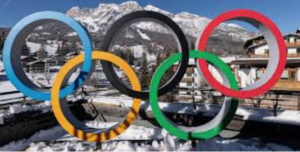
On February 6th, 2026, 2900 athletes gathered in Milano and Cortina in Northern Italy, followed on March 6th by 600 para athletes for the 2026 Winter Paralympics. 47% of the athletes in the regular Olympics were female (Canada’s team had 52%), and 30% of the Paralympians were female, up considerably from 2022. There were 19 disciplines in the regular Olympics and 6 in the Paralympics (hockey, alpine skiing, cross-country skiing, curling, biathlon, and snowboarding).
All the athletes were there because of hard work, skill, courage, determination, and a positive attitude, all trying to do thei
r best and hoping to win a medal. They were also all there, having had to overcome many obstacles, the para athletes more than the regular athletes. The para athletes also hoped the public, as a result of their efforts, would focus on their abilities, not their disabilities. What the world received was a display of tremendous athleticism, spectacular and exciting events, heart-warming camaraderie, a positive spirit and countless stories. Here are just a few:
ATHLETIC PERFORMANCES
 A 29-year-old cross-country skier, Johannes Høsflot Klæbo, from Norway, was in a class by himself, winning 6 gold medals: some by large margins. In total, he has won 11 medals over 4 Olympics. Some people believe cross-country skiers are the most fit athletes in the world. Norway, with a population of 5.7 million, won the most medals with 41, and Canada won 21.
Mikaël Kingsbury, a 33-year-old Canadian freestyle skier and Canadian flag bearer who has won 100 World Cup races, and was just recovering from an injury, won a gold medal in the dual moguls and a silver in the moguls to go with the previous 3 he had won. The first thing he did after winning was hug his partner and one-year-old son, Henrik. About 4 weeks after the Olympics, he announced his retirement from competitive skiing and will coach instead.
Many of the para events were unbelievable, in particular the vision impaired alpine ski events (downhill, slalom and giant slalom). Each skier follows a sighted guide decked out in a bright outfit with a 2-way radio to give instructions. The downhill is skied on the same course as the regular downhill at a speed of up to 130 km/hr (80mph). Regular downhillers can reach speeds up to 160(kph 100 mph). Also amazing were the visually impaired slalom and giant slalom skiers who turn around dozens of gates. We only saw one miss a gate.
The para mixed cross-country relay was filled with enormous excitement and what appeared to be continual chaos. Each team has 4 skiers who ski 2.5 km each. Teams need to be balanced as to gender and impairment classification, and each team also must have a mix of standing, sitting and visually impaired athletes. Some may have an arm impairment, and others may have a leg impairment. Skiers are allotted handicaps according to their disability (for example, a skier with one arm would have a different handicap than a one-legged skier). Watching these athletes pushing themselves to exhaustion for their team, country and each other, all knowing what each athlete goes through, then having a communal hug, brought tears to our eyes. https://www.youtube.com/watch?v=CrIppj9402M
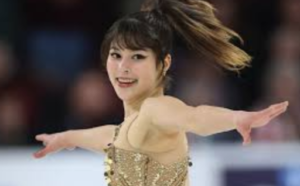
Most people who watch figure skating love the grace, daring, strength, and courage required to do the endless mix of footwork, jumps, throws and lifts, sometimes in an upside-down position. The 2 stories that stood out were the women’s and men’s singles.
The Women’s was won by an American, Alysa Liu. She had won a world title and a bronze in the Beijing Olympics in 2022, but retired because of the regimentation she had to undergo in order to excel. She came out of retirement, trained on her terms and won.
The men’s story is quite different. Ilia Malinin, 21, also an American, had won 13 competitions in a row, including 3 World Championships. He had 7 quadruple jumps he could do almost as easily as most people walk across the street. The expectation of his winning was so high that he was crowned champion in everyone’s minds and every sports story written before the event took place. In fact, he was leading after the short programme.

As he came out to skate his Free Programme in front of a capacity crowd and an estimated 4 million on TV because of the expectations, his emotions overcame him. As a result, he fell twice and instead of quadruple jumps, he did singles and doubles and came 8th. He was stunned, as were all of the watchers. Instead of sulking or blaming someone, he was very gracious to the winner, Mikhail Shaidorov from Kazakhstan. Because HE IS THE BEST. Four weeks later, everyone was very happy as Ilia redeemed himself, overcoming his emotions and winning the 2026 World Championships.
The Ukrainian teams, given all of the horrible disruptions in their country because of the war, accomplished quite a feat to field a team of 42 for the regular team and 25 for the Paralympics (winning 19 medals).*
The 3 Hockey finals were all between Canada and the U.S.A. They were all nail-biters, and to the chagrin of all Canadians watching, the U.S.A. won all three. The men’s and women’s teams in the first few minutes of overtime.
The sledge hockey was close until a few minutes to go in the final period. I had never watched a full sledge hockey game before. All of the players had lost the use of one or two legs at birth or by an accident. They were strapped in a sitting position to a thin board mounted on a skate blade. They carried a stick in each hand and propelled themselves with their arms and a stick.
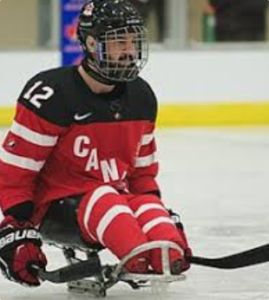
The game itself was similar to a regular hockey game. It was intense, back and forth and hard-hitting. Greg Westlake (39), one of the Canadian players, had lost both legs at 18 months, had played for the Canadian team for many years, but had retired and was acting as an assistant coach. He came out of retirement in part to demonstrate to his children the importance of taking risks in life.
OVERCOMING OBSTACLES
There was not a competitor at either Olympics who had not had to overcome some obstacles. Lindsay Vonn, one of the best women downhill skiers of all time, had won 83 World Cup races. She retired at age 35 but came out of retirement 6 years later this year at age 41 (Normal retirement is late 20s). She had amazingly won 2 World Cup races this year and was favoured to win the downhill.
Less than a week before the scheduled Olympic downhill, she fell in a race, tearing her ACL (the ligament that stabilizes your knee). This is a common but serious knee injury, as it normally takes a year or so to return to top racing form. Undaunted, she put a brace on her knee, tried it in a training run and skied well.
On race day, she hit the 3rd gate, not because of her knee, fell and broke her tibia in the same leg in several places and was helicoptered off the mountain. She has since had 6 operations on the bone. Disappointed, she was happy she tried, “I have no regrets,” she said. There are more operations to come.
Also, with skiing, Federica Brignone, a top women’s down-hiller, an Italian who was born in Milan and who had won 37 World Cup races, tore her ACL and smashed her tibia last April. As mentioned, a year is a normal recovery time. Determined to be in the Olympics in her home country, she did it and won both the Super G and Giant Slalom.
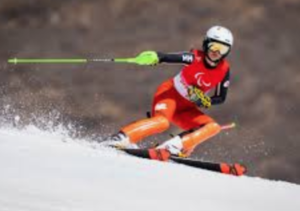 Michaela Gosselin, a Canadian para alpine skier, won a bronze in the slalom (Canada’s 200th medal in the Paralympics). This is a story for several reasons, at 18 she developed cancer in her shoulder, causing her to lose some functioning on one side. Because she was a good skier, she was recruited by the para ski team. She competed in the 2022 Paralympics, placing 4th, 5th and 6th. After the Beijing Olympics, she, too, tore her ACL. She retired and went to Queens for 2 years, but decided to make a comeback.
This is also a story for our family, as she is from Collingwood, and so am I. She skis at Osler Bluff, where our family skis, and she and her family are known to many in our family and our friends. In fact, she was a coach of our grandson Ethan. Her father, Kevin, who was on Canada’s National team, coached another grandson, Oliver.
Over the years, she has been a big inspiration to many at the club, particularly the young people, not only because of her overcoming obstacles, but because of the lovely person she is. Congratulations, Michaela and thank you for being such an inspiration.
These are only a few of the stories, not to be forgotten are the performances of: the speed skaters who are always on an edge seemingly about to fall, but do not, the flips of the snow boarders, the daring of the bobsledders, the strategy and precision of the curlers, the support of the trainers and coaches, the hard work of the volunteers and organizers, the financial support of the sponsors and the government, the positive work and stories, of the commentators, most of whom are previous Olympians, the people who created the sports, particularly the Paralympic sports so the para athletes too could participate, and be world class athletes too, and all of the athletes who qualified for the games, all of whom in my eyes are winners.
 The dedication, hard work, courage and demonstrations of overcoming immense obstacles showed the rest of the world great values and positive happenings. All of this was done in the spirit of the Olympic Games: Friendship, Solidarity and Fair Play under the backdrop of the architectural and artistic splendour of Milan and the beautiful mountains around Cortina. Thank you all for creating these exciting and positive happenings taking us away from the chaos around us.
If you like this blog please share with others!
Till next time,
Chris Snyder, Climate Optimist
Email: snyderchris74@gmail.com
Stories of Good News and Hope: https://chrissnyder.makeanimpact.ca
You May Also Like

Getting Along and the Golden Rule
Cambodia!
