April Showers Bring May Flowers
 THERE IS MORE GOOD NEWS IN THE WORLD THAN BAD
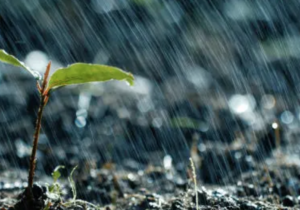
It was April 20th and had been raining for about 20 minutes. However, Rose ignored the water dripping from her hat and instead remained on her knees planting the last of the seeds that would magically turn into her colourful fall garden of zinnias, marigolds, cosmos and dahlias.
Rose was a very keen gardener, but it had nothing to do with her name. She had not always been this way. In fact, until her husband died some 20 years ago, her gardening had been limited to watering Frank’s vegetable garden when he was away on business and in the winter looking after some shamrocks which turn into clover.
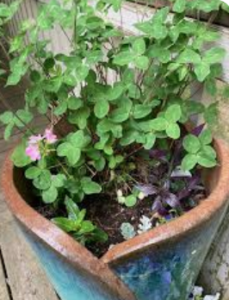 The shamrocks had been planted in a flower pot some years ago by her grandmother in celebration of Rose’s birth. The shamrocks had been chosen in the off chance that when they turned into clover a lucky 4 leaf clover would be found growing amongst the rest and, in turn, translate into good luck and a good life for Rose. Care for the clover fell to her mother on her grandmother’s death and then to Rose when her mother passed on. Rose had felt obligated to continue the care for the clover and keep this many generations’ family legacy alive.
She knew if she did not tend to Frank’s garden, she would feel guilty. After the last squash was harvested, she actually felt quite proud of herself that she had kept his garden alive. She had enjoyed the activity; it was good exercise, and while gardening, she had many good memories of Frank. Furthermore, the potatoes, squash and tomatoes had all been great to eat.
Because of her gardening success, she thought, “Maybe I should plant some flowers.”
With the help of her son, they created a small garden and planted some crocuses, daffodils, tulips and hyacinths, all of which would come up in the spring. The winter was long; however, her children gave her an amaryllis at Christmas. Watching this grow an inch or so almost every day and blooming about 2 weeks later, she became enthralled with this fascinating flower. In late March, the crocuses came out, signalling spring was just around the corner.
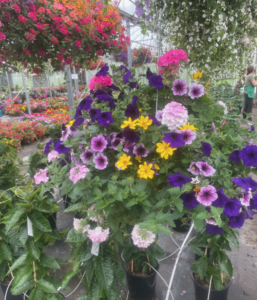 Weeks later, the other flowers she had planted started to poke through the soil, and she was thrilled when the yellow daffodils bloomed, followed by the multi coloured tulips and the beautiful-smelling hyacinths. She cut some of the flowers and made them into several bouquets, which she brought into the house. The bouquets lifted her spirits and gave her great joy whenever she looked at them. She dutifully planted the vegetables; however, the colour and sense of accomplishment of the flowers made her yearn for more.
Her son had helped her dig a bigger garden, and she decided to plant some perennials. She chose lily of the valley, iris, daisies, nasturtiums, peonies and 5 different kinds of roses. She arranged them in what she believed would be an attractive configuration. Now, 82 years old, her gardens had grown considerably, and including Frank’s old vegetable garden, took up half of their back yard. She had also planted some shrubs and lilacs, and a few flowering trees: Japanese crab apple, a magnolia, some forsythia, a red burning bush that became crimson red in the fall, and she continually added new flowers. She had a small fountain installed, and together with her 93-year-old neighbour, Ken, had the most spectacular gardens in the area.
However, she found the weeding and gardening more challenging. At first, her son, in addition to the heavy work, planted some flowers of his own, including a dozen daffodils. When none of his daffodils came up, and after doing the weeding, he decided that, while he was happy to help his mother and loved flowers, he was not a gardener.
Her gardening soul mate, Ken, became her inspiration, and as long as he continued to garden, she decided she would too. She knew the exercise was good for her and was probably what kept Ken going. They talked a lot, and he convinced her to join a garden club; as a result, Rose had taken several garden tours to England. At first, gardening had removed any feeling of guilt she had, and, in fact, it became a pleasant reminder of Frank. Now gardening and flowers are her life.
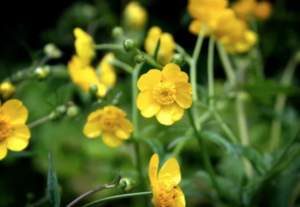 She took great joy in showing her grandchildren the little Johnny jump-ups that looked like miniature pansies, which poked up from the lawn. They also loved the buttercups and the practice of putting the yellow flower under their friend’s chin. If it was yellow under their chin, it showed they loved butter. The children also planted their own seeds every year and loved coming over to water the shoots and watch the magic of them turning into colourful flowers. Do you like butter? https://www.youtube.com/shorts/8allTrDpdNY
Rose’s daughter had taken over attending to the clover. Like Rose, it was now 82, she was the 3rd generation to look after it. It was anticipated that her granddaughter would eventually take over its care. Ideas from her garden club further expanded her imagination and were continually translated into enhancing her garden. Rose lived on a corner and had a low fence. People would stop and look at her garden. She was well-known, along with Ken, for their beautiful gardens and their wide variety of colourful flowers.
In the winter, Rose’s home now looks like a garden centre. Rose, for a number of years, had been asked to go to the local public school to talk to the children about flowers. She loved to do it. As part of the discussion, Rose always asked the children to identify their favourite flower or tell the others something they found interesting about flowers. Here are a few of the answers:
1) Heidi said, “My mom really likes it when we give her flowers on Mother’s Day.”
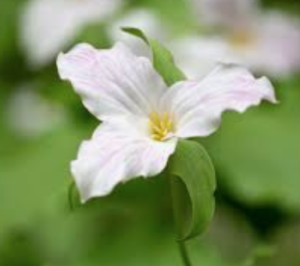
2) Reuben said, “Last summer we took a car trip to the West Coast, and I found out every province has their own flower. Ontario’s is the trillium, Manitoba’s the prairie crocus, Saskatchewan’s the western red lily, Alberta has the Wild Rose and B.C. has the Pacific dogwood.” The teacher chimed in and said the other provinces also have their own flower; if they were interested, they could look them up online.
3) Ingrid said, “My grandmother has cancer, and my dad told me the Cancer Society has the daffodil as a special flower because it is yellow and a symbol of hope.” Kenny from the back chimed in and said the little blue flower, the forget-me-not, is the flower for Alzheimer’s.
4) Delphina, who is from Uganda, said, “I like the poinsettia, which is bright red. In Uganda, it grows on trees. It is really beautiful.”
5) Tommy said, “I like wild flowers, particularly the trillium, and because of their names, I like the Jack in the pulpit and the dog toothed violet. I brought some trilliums home once and found out I was not supposed to pick them. My dad was really mad at me.”
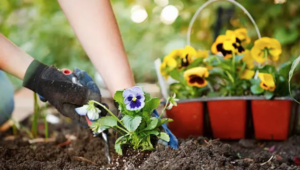 6) Treena said “I love seeing the flowers along the road. I like their colour, and they make me happy. I really like the pansies. They look like a happy face.”
7) Manu added, “My mom told me she once went to a conference inside a greenhouse at Canada Life, in downtown Toronto. Because of all the oxygen in the air, it kept everyone awake.”
8) Lindsay said, “I like looking at the flower petals and watching the bees dart in and out.” And with an embarrassed giggle, she said, “I also like taking the petals off of the daisies one by one and repeating, “He loves me. He loves me not.”
9) Esther said, “I heard the other day that every month has a special flower. I was born in February. My flower is the Iris.”
 Rose also liked to pass on interesting information. In particular, she liked to talk about the blooming cycle. “Most flowers bloom every year, but not all. For example, the baobab tree in Africa only blooms every 50 years. Also, because of climate change, rising temperatures and erratic weather, flowers could in the future bloom at different times. This could cause a problem for the birds and insects that depend on the flowers for food.”
Some Fascinating Floral Facts:
According to historians, flowers have been around for an estimated 1.5 million years, and though no one knows for sure, there are an estimated 400,000 varieties. Each species in turn has many varieties within it. For example, there are an estimated 400 different kinds of roses, and there are hundreds of hybrids. The red rose is a symbol of love. The Robbie Burns poem A RED RED ROSE, “Oh my love is like a red red rose..” https://www.poetryfoundation.org/poems/43812/a-red-red-rose is one of the world’s best-known poems. A white rose means purity, innocence and new beginnings. Carnations are the official flower of Mother’s Day.
Even though there are over 28,000 species of wild orchids and over 100,000 registered hybrids, the orchid is one of the most prized flowers in the world. Receiving a corsage made from orchids is always considered to be special!
Taking photos of flowers, be it in a group for their colour or a close-up showing the intricacy and beauty of the petals, is a common thing to do, and even though there are millions of flower paintings, no artist has yet been able to match the beauty of a real flower.
Flowers are constantly mentioned in songs. People of my age remember Edelweiss from The Sound of Music and the family frolicking through the meadows in the Austrian Alps, and Pete Seeger’s “Where Have All the Flowers Gone,” a song written as a protest to the Vietnam War, sung by many. The version I like most is sung by Peter, Paul and Mary. The flowers represent beauty and goodness, a contrast to the ugliness of war.
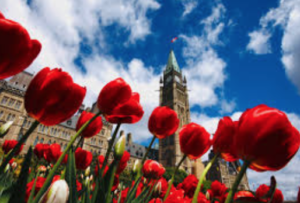 Flowers are used to help us celebrate, as in weddings and parades, to remember, as in funerals and Nov 11th, and to say Thank You! The longest-lasting thank you are the tulips left by the Dutch Royal Family in Ottawa for Canadian hospitality to the Royal Family, who lived in Canada during WW2. They are also a tourist attraction and, for many, a sign of spring.
Flowers can be big business, from the seed makers to the florists, to the bouquet arrangers, to the growers and gardeners. There are thousands of flower books with accompanying photographs telling us all about them.
Planes full of flowers in the winter are flown every day from the warm climates of Africa and South America to Europe and North America to be used to cheer people up. Canada exports $1 billion of flowers every year, mainly to the U.S. Many of these businesses are owned by the Dutch, whose national flower is the tulip. In 1630, tulips were worth more than gold and because of their demand, prices were pushed up, turning the tulip into the world’s first financial bubble. Eventually, the price came tumbling down, and many speculators were wiped out.
Flowers have positive medicinal effects, including the lowly dandelion, which is credited with creating benefits for everything from gut relief to helping the immune system. Research shows flowers bring both mental and physical benefits, reduced stress, lower blood pressure, improved emotional well-being and increased productivity.
An example of this is the seminar Manu’s mother went to at Canada Life, and the fact that many people escape to nurseries to improve their mood when they are emotionally down.
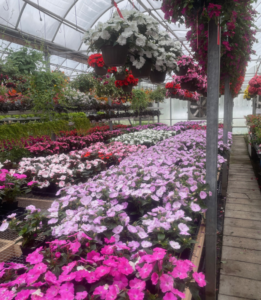 Martha Stewart once famously wrote, “If you want happiness for life, create a garden.” However, you do not need your own garden to receive joy from flowers; it could be something as simple as seeing the first trillium in the spring or wild orange lilies at the side of the road, or being given a bouquet of red roses, or you might even have your own way of receiving joy???
till next time,
Chris Snyder
climate optimist
Email: snyderchris74@gmail.com
Stories of Good News and Hope: https://chrissnyder.makeanimpact.ca
You May Also Like
Cambodia!

Getting Along and the Golden Rule
