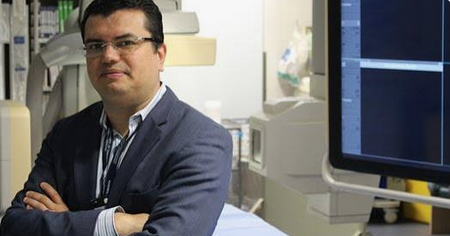
I recently received a St. Michael’s Hospital fundraising brochure in the mail that included several Good News Stories. The brochure included a story that on March 19th 2026, St. Mike’s neurosurgeon Dr. Vitor Pereira made history when he performed the world’s first telerobotic brain surgery on a stroke patient. The surgery, which removed a dangerous blood clot, was performed from a control station nearly 200 kilometres away from the patient by a state-of-the-art robotic system.
This remarkable achievement paves the way for life-saving stroke care for patients in rural, remote and underserved communities. St. Mike’s also became the first hospital in Toronto to successfully perform a robotic mitral valve repair. The mitral valve is a critical valve controlling blood flow in the heart. This advanced surgery means smaller incisions, less trauma, shorter hospital stays and faster recoveries.
St. Mike’s is not the only hospital doing amazing things. Mount Sinai has a story in their fundraising material about Canada’s largest sarcoma program located at their hospital, where they diagnose and treat some of the least understood and most complex cancers. Other Canadian hospitals are doing great things. Sick Kids is rated as the best children’s hospital in North America. The UHN (University Health Network) in Toronto (Princess Margaret, Toronto Western, Toronto General, Toronto Rehab, West Park Healthcare Centre and Michener Institute of Education), according to Newsweek magazine, is rated the second-best healthcare complex in the world. There are also many other top hospitals across the country.
These outstanding results do not happen in a vacuum. It is at these major medical centres where outstanding surgeons, money, technology, research, and leadership come together. Government money funds most of the day-to-day healthcare costs, however, much of the money for research and equipment comes from not only very wealthy individual donors and foundations, but continual small donations from everyday people.
Hospitals, however, are not just about complex pioneering surgery, but also about caring for sick people and performing everyday surgeries such as hip and knee replacement. These operations have become routine and, in most cases, are now day surgery. 10-15 years ago, hip surgery typically meant a 4-night hospital stay. Not too many years ago, having cataracts often led to blindness. Cataract surgery is now one of the most common operations in the world. There are an estimated 20-30 million cataract surgeries performed in the world every year. Within 10-20 minutes, eyesight can be returned to what it was like when you were a teenager.
One of the major criticisms of our healthcare system is the wait time; however, once one is seen by the appropriate physician, the first comment I hear from these people is one of gratitude, saying, “The care I received was outstanding.” Emergency Rooms have also been the source of much criticism for wait times. I was recently in an Emergency Room and was awed by the number of people waiting, the immensity of the tasks, and the diversity of problems the caretakers had to look after. As I sat there, I saw men on crutches, old women being supported by their sons or daughters, pregnant women, frightened stroke patients, a person with a dislocated shoulder, children with facial lacerations. I saw expensive and sophisticated equipment, beds, IV and blood transfusion units, and oxygen canisters. There were dozens of nurses and support staff, some attending to patients, others doing administrative record-keeping, and others coordinating tests and procedures. I marveled at how this was all pulled together, and the stress the caregivers were under, dealing not only with the physical aspects of the patients’ problems, but also their fear and anxiety. I thought these people should not be criticized; they are heroes and should be thanked and praised. This was at the Trillium (Mississauga Health Partners Hospital), Ontario’s largest community hospital. Their annual report states that from 2025 to 2026 there were 1 938 315 visits, 74 231 surgeries, 73 264 admissions, 921 212 outpatient visits, 😊 and delivered 8673 babies.
Of course, a lot of our healthcare is delivered outside of a hospital, and much of it is to do with prevention and general practitioners. The system is criticized for not doing enough about prevention; however, there is much in the public domain about exercise, nutrition, sleep and looking after yourself. It was estimated there were about 2 million people without a general practitioner in Ontario. Shortage of GPs is also a problem in other provinces and countries.
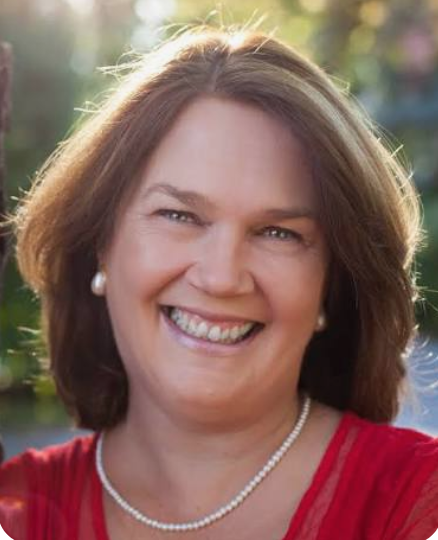
After much pressure from voters, Ontario hired Jane Philpott, a family physician and former Minister of Health, to do something about it. The province established a goal of everyone in the province having a family physician by 2029 and committed $3.4 billion towards making it happen. Under Philpott’s guidance, the number without a family doctor has been reduced. They have hired 20 000 new physicians, reduced paperwork, changed many systems and procedures, including how some doctors are paid, and turned over much of what family practitioners did to pharmacists, nurse practitioners, and others. They also increased funding so clinics could be expanded, created a programme to determine where there are practices with open spaces, and connected people in need with those practices. For example, in a 6 km space on the Lakeshore in Toronto/Mississauga between Kipling Ave. and Southdown Rd. there are 4 practices with signs saying they will accept new patients.
There are now 4470 more nurses than in 2024, and more training is being done. There is much being done in all areas of healthcare, but much more is needed, particularly in rural areas. Nurses, for example, are burning out. There needs to be even more nurses, and they still need better working conditions and fair compensation for their work. These problems are in large part because of underfunding by the government over the years and increases in the number of people being served. In fairness to the government, politicians have to juggle a limited supply of money with unlimited demands from hundreds of sources. Canada is not alone.
THE WORLD
There is Good News in healthcare happening all over the world. Bill Gates, in his regular blog, highlights the improvements in child survival, particularly in sub-Saharan Africa and Rwanda. Since 2000, the number of children who die before age 5 is down 73%.Maternal deaths in childbirth have fallen 80%, and nearly all pregnant women now give birth in a health facility with a skilled birth attendant present. One of the big issues is doctors. They are now educating about 30 000 new African doctors every year; however, many countries cannot afford to pay them.
Recently, I have heard some fascinating stories about improvements in African healthcare.
Here are a few:
One family in Burundi I know had 9 children. One died because of a lack of healthcare. The mother challenged the remaining 8 children to do something about it. No one in their family had previously made it past secondary school. Of the remaining 8 children, 5 have since become doctors and have set up a local hospital that now has worldwide connections.
In Kenya, they have doctors but no one to pay them. Rather than have the doctors go to Europe or North America, an organization in Nairobi has been created to set up rural clinics and find the money from outside the country to pay them. They have gone to Madiro, a Canadian organization specializing in healthcare in Africa, to find funding for the rural franchises. The investors from Canada and other countries will provide the capital required for a clinic and share in some of the proceeds. Money for care will come from payments from the patients or insurance programs. The cost for one clinic is $25,000.
In Rwanda, according to Gates, there are community workers dedicated to going house to house to check on people’s health. About 60% of malaria cases are now treated by community health workers at home. Some people are receiving better care than many in the Western world.
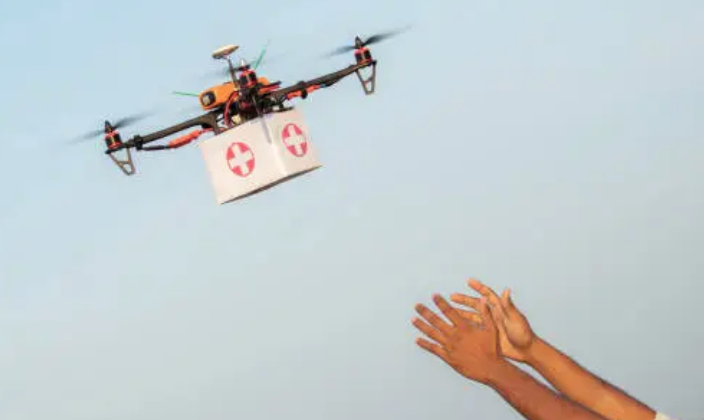
Rwanda also has a sophisticated drone programme which delivers medicines to rural clinics.
Many are being educated outside of the country. Canada, the USA, and Germany are considered to have the best medical education systems in the world. Often, people come and want to stay, helping the educating country but making it more difficult for the country of origin.One family in Burundi I know had 9 children. One died because of a
For sure we and the rest of the world have many healthcare challenges and will always have. There are also countries that, in some areas, perform better than we do in Canada. The reality is there are many medical miracles happening every day around the world; the above is just a small snapshot. In general, better healthcare is being delivered all over the world. I say let’s hear more about the successes instead of all of the doom and gloom. Furthermore, let’s use our successes to motivate us to solve these problems. WE know fundraisers use good news stories to motivate donors; it works. So do continual research, technology and commitment to improving health by many people and organizations. According to stats Canada and the UN, in 1950 the life expectancy at birth was 68, and in 2022 it was 82. To me, that speaks volumes.