Artemis II – A TRIP TO THE MOON and BEYOND: What did it bring?
THERE IS MORE GOOD NEWS IN THE WORLD THAN BAD
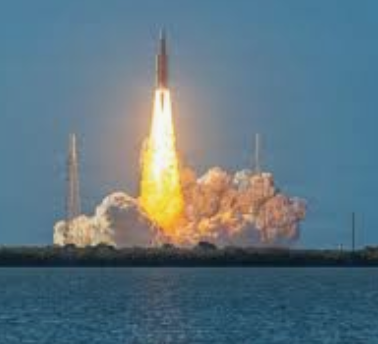
There was a huge sigh of relief and feeling of elation from the families of the 4 astronauts as Integrity, the 98 metre long rocket, began its upward movement in its journey towards the moon and beyond. In a mere 1.5 minutes, the spacecraft had reached a speed of 2600 mph, and after 8 minutes it had reached a speed of 15,000 mph and was 78 miles above the earth. All that one could see with the human eye was a yellow dot and a wispy trail of smoke. It was then, as the rocket entered space, that the elation turned into a momentary calm, then to anxiety, as every one of the family members was cognizant of the fact that they might not see the astronauts again. The 4 astronauts’ families were not the only ones watching this much-awaited liftoff at Cape Canaveral, Florida.
THE WATCHERS
There were also an estimated 18 million watching on TV and 500,000 people outside at Cape Canaveral, many with young families who had been waiting for some time for the launch. Many of the young, because of what they were seeing, excitedly decided that they, too, wanted to be astronauts when they grew up.
Inside Mission Control, hundreds of miles away in Houston, there were 28 Astronauts and hundreds of others who had been working for many years for this moment. They were all relieved to see the success of this dramatic liftoff. They had all been working on the final stages of liftoff: checking every one of the parts and functions to ensure everything was safe for the astronauts, not just at liftoff but for the next 10 days.
It had been 56 years since Neil Armstrong and Buzz Aldrin first landed on the moon.12 astronauts eventually landed on the moon before the programme ended. Since then, technology has changed dramatically, making the accomplishment of the first moon landing even more incredible. Since then, much of what was learned has been forgotten, most participants have died, and methods and procedures have changed.
Adding to the stresses was the relatively small size of the current funding: $300 billion in current dollars went into the first lunar programme, compared with an estimated $93 billion now. This phase of Artemis would take astronauts to the moon and beyond; the following phase will land people on the moon and set up for the next phase to Mars.
INSIDE THE SPACESHIP
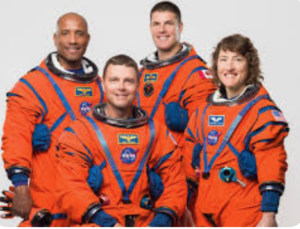 The Artemis II blast off had been postponed several times, and this one had been given an 80% chance of o.k. weather. So far, everything was going perfectly. The highly trained and skilled astronauts were inside waiting to go. Jeremy Hansen, a Canadian, would be the first non-American to go into deep space and reach the moon’s orbit. He had been an astronaut for 17 years, but in fact had been dreaming of becoming an astronaut ever since he was a small boy living on a farm outside of London, ON. As evidence of this interest at age 5, he had turned his tree house into a rocket ship. Victor Glover, the pilot, would be the first person of colour to go into deep space, and Christina Koch would be the first woman. The commander, Reid Wiseman, had previously been in space for 166 days.
The lift off time was to be 6:28. At 6:08, the 20 minute count down began. It continued unabated until 6:18, then it stopped. “Oh no, everyone thought, is this going to be yet another postponement?” A few minutes later, the countdown continued, then came the orange flame from beneath the spaceship. 5,4,3,2,1. Then this huge rocket, 5.6 million pounds (2800 tons), the length of a football field, started moving slowly upwards, then faster and faster. Within 8 minutes they were in space and moving around planet earth. So far, no hitches, and everyone was both relieved and jubilant.
THE OTHERS
On the ground, the media were interviewing former astronauts, scientists, the public and others. Said one space expert, “This is not a U.S. project but a project (for) all humanity as the benefits will help all humankind.” Others talked about the training and the focus on safety. We were reminded that this was a fact-finding trip, to learn about going to the moon and then to Mars. We were also reminded to keep this initiative in perspective. The mission, while taking humans the farthest they have gone in space (252,000 miles), would only be 10 days compared with stays on the space station of up to 471 days. The top speed would be 25,000 mph, and in an emergency, it could return home in 4 days. By comparison, to get to Mars would take 6 months, one way.
We were being told repeatedly that these missions pushed humans into doing things they had never done before, leaving the thought that if we can get to the moon, surely we can harness climate change (or anything else we wish to do). About an hour after blast off, the interviews stopped. Meanwhile, many miles up, the astronauts were hard at work.
THEIR WORK

The astronauts, who were only being paid about US $150,000 /year, had a very specific agenda which included many scientific experiments. They worked on 5 human-focused research studies which evaluated the effects of deep space travel on the human body, immune system changes, radiation exposure, micro-gravity and cardiovascular health. They had to perform a photography study of 30 lunar targets. For the first time, they had their own cell phones, taking pictures and communicating with home. There were the first-ever shots of many things, including a rarely seen total solar eclipse of the Earth. They also deployed some new satellites. They would sleep for 4 hours, every 4 hours and undertake regular exercise.
There were also a number of unscheduled learning opportunities and humanity-enhancing reflections, observations, and expressions of feelings by the astronauts for the watchers, such as comments about the beauty of the Earth. It reminded some of a statement of Prof David Baker, co-director of Adams Observatory in Austin, Texas, who has said that there are 6000 confirmed exoplanets, but we have yet to find another one like Earth. There is no planet B. WE MUST LOVE YOU! Victor Glover, the pilot, also reflected on LOVE. Love is one of the most important mysteries on earth. “For all of you down on earth, we love you from the moon.”
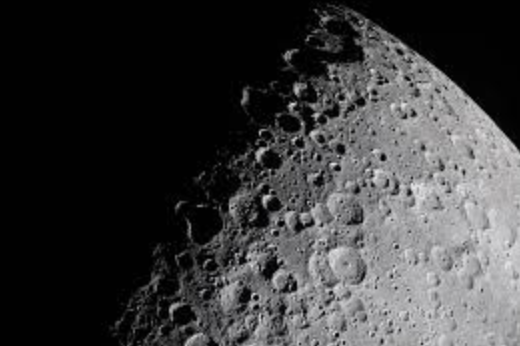
The camaraderie of the astronauts was evident; they laughed about the problems they were having with the toilet, a seemingly minor one to us on Earth but potentially huge if they were going to Mars. There was also continual gratitude given to all who had worked on the programme and supported them in other ways. There were some very touching and emotional moments as they all remembered Commander Reid Wiseman’s wife, Carroll, who had died from cancer several years before, leaving her husband to raise their 2 daughters. They asked for, and received permission to name one of the craters on the moon the Carroll crater.

Commander Wiseman also lovingly told us one of his daughters had sneaked some homemade cookies into his luggage, and the best thing he brought on his journey was a daughter’s bracelet. Jeremy Hansen brought on board a painting of the moon, painted by an Indigenous painter from Sagkeeng First Nation in Manitoba, Henry Guimond. A reminder that the moon has special significance for Indigenous Peoples. We also learned that Hansen had spent 4 days in Northern Manitoba with Indigenous Peoples so he could better understand the importance of the outdoors and nature. Hansen also told us he was not particularly fearful because he was so well-trained.
Astronaut Christina Koch, who had previously spent over 300 days in space, talked about the importance of simple life moments. Sleeping in space was one of the best parts of the experience. On seeing Earth as a tiny object, she said that she felt united with fellow humans, reflecting on how alike we all are. On reappearing after a 40-minute blackout, she said: “It [was] so great to hear from earth again.”
They all talked about the camaraderie. Summed up by Reid Wiseman after returning to earth, “We went as friends and came back as best friends.”
THE BENEFITS
During the 10 days, many watchers thought, “This is a phenomenal happening, but asked what have we gained? Is it worth all of the money? Could we not spend the money in a better way?” What follows is a short list of what we humans have gained not just from this flight but also from the space programme since its inception:
1) Said one space scientist, “The space programme is an engine of ingenuity. Since its inception, the data collected has helped improve our health system, leading to better testing of cancer drugs, muscular atrophy, osteoporosis, asthma, heart issues and dementia.” More will come from this trip.
2) The space programme provides us with a different and better perspective and appreciation of our world.
3) The programme has enormously expanded our knowledge, helping us expand what all humans can do… not just Americans.
4) Space research has taught us how to recycle wastewater, so that up to 93% can be reused. In particular, helping people with unclean water.
5) It has given us a better understanding of space, just as the explorers of the 1400s and later did regarding the so-called New World.
6) Counter to what is often practiced on earth, the programme has demonstrated the power of working together and the value and dignity of all people regardless of race, colour, creed, gender, ethnicity or where we live.
7) Satellites have expanded our communication options, giving us many new ways we can connect.
8) It has increased and broadened our spiritual perspective and expanded our reverence for life.
9) It is a great example of international cooperation.
10) It has inspired many, not just Americans, and helped people think and act in bigger, more meaningful and effective ways.
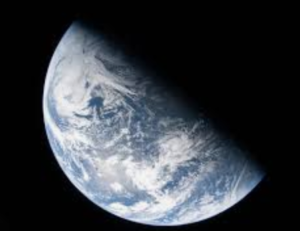 11) The programme reminds us of the preciousness of, and gratitude for, a beautiful world, the importance of caring for it and ideas and tools to make an even better world.
12) It distracts us from some of humanity’s bad practices, highlights good practices and creates potential benefits and opportunities for everyone, giving us HOPE.
THE COST
Most people will agree with the many benefits of space programmes, but what of the cost? Not just in money spent but in alternative uses of money and time. Would it not be better to direct the money and time to other programmes, such as those focusing on poverty, pollution, climate change and nutrition? I personally cannot come up with a way to compare the many known, unknown, and intangible benefits against the cost. Perhaps looking at the costs of a few other programmes will help us weigh the relative benefits.
ALTERNATIVE PROGRAMME COSTS
1) The Artemis space programme up until now has cost an estimated $93 billion U.S. in current dollars.
The benefits as outlined above.
2) U.S. AID, which saved thousands of lives per year and helped millions until cancelled by Trump, was about $50 billion U.S. per year. A mistake.
3) Military
The Trump/Iran war to date is estimated to be $25 billion plus human costs. This number is highly contested. Some close observers put the cost in the 100s of billions and could go as high as a trillion. An additional $200 billion is being asked for to finish the war. Trump is asking Congress for an annual and increasing budget of $1.5 trillion per year. The military is needed for security, but $1.5 trillion? Really? Scary and too much!!!!
YOU BE THE JUDGE
For me, the relative benefits of the space programme come down on the positive side of the ledger as it did for Neil Armstrong when he stepped onto the moon and said, “One small step for man, One giant leap for mankind,” and I believe shared by the Artemis astronauts as they took their first steps back on earth.
If you like this blog, please share with others!
Till next time,
Chris Snyder, Climate Optimist
Email: snyderchris74@gmail.com
Stories of Good News and Hope: https://chrissnyder.makeanimpact.ca