Reconciliation: A Partial Update
“Education got us into this mess, and it is education that will get us out of it.”
– Murray Sinclair, Former chair of the Truth and Reconciliation Commission of Canada
THERE IS MORE GOOD NEWS IN THE WORLD THAN BAD
EDUCATION, ONE PERSON’S STORY
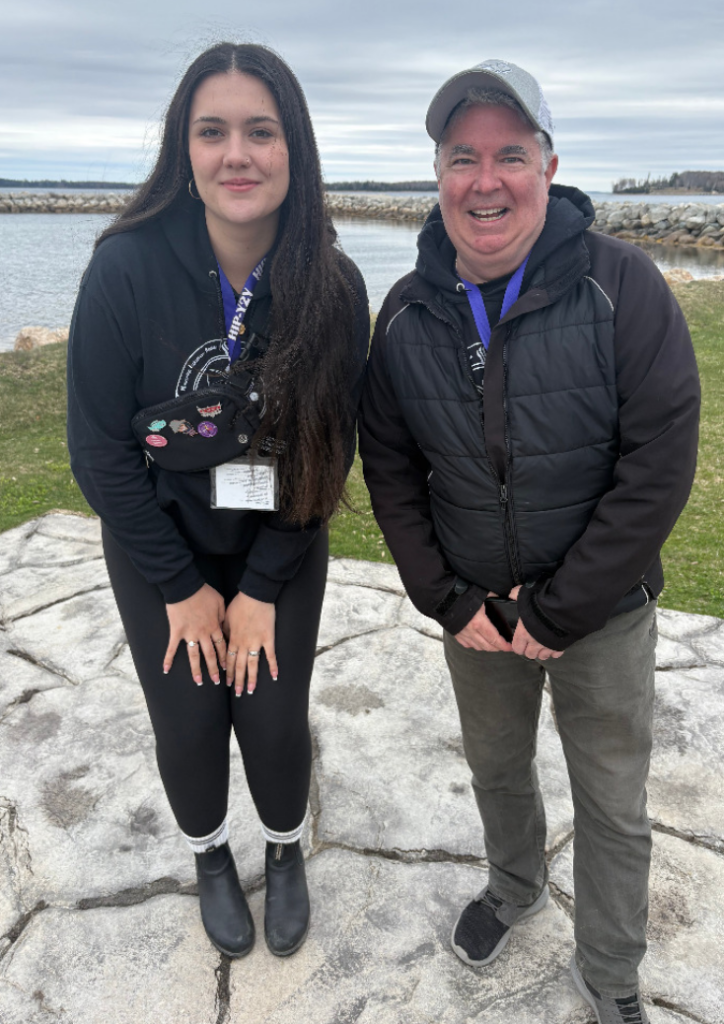
Samantha Westlands is a 3rd-year student in Indigenous Studies at the University of Manitoba in Winnipeg. Her grandmother is Anishinaabe, and her grandfather is Métis, both from Manitoba. Her mother is one of 7 children. Her father is Welsh and Scottish, having come to Canada in the 1960s. Samantha grew up in Vancouver, went to a regular high school and has one brother.
Samantha was always well aware of and immersed in her Indigenous heritage but did not live close to where her people came from. She was also well aware of the stereotypical views and comments that floated around. Education was always encouraged in her family. She always loved to learn and was particularly interested in history and the humanities. She knew the advantages of having a good education, in part because of the long-term financial benefits that often come with it.
In both public and high school, she was a good student; however, she loves university more, as reflected in her very high 4.5 average. Like many young people, she did not know what to study at University. In 2023, she applied for and was chosen for a HIP (Honouring Indigenous Peoples)* Youth 2 Youth programme, which brings together 25 Indigenous Young People and 25 non-Indigenous Young People from across Canada for a week focused on land-based education. Until then, she did not know much about her culture but was very moved by what she learned.
Much of the programme was held north of Winnipeg at a sacred Indigenous place called TURTLE LODGE. This was her tipping point. She decided, with family support, to go to the University of Manitoba and enrol in the Indigenous Studies Programme, partly because of wanting to be close to her Anishinaabe and Métis culture in Manitoba, as well as there being a great Indigenous Studies programme at the University of Manitoba. She believes more than 50% of the students in this programme are also Indigenous. Samantha loves to learn, and wants to help others learn. She plans to get her Master’s, then hopefully a PhD. She has dreams about becoming a professor.
In 2024, Samantha attended another Y2Y event as a youth leader in BC and now works part-time with HIP, working with Executive Director John Currie on communications, general administration and liaising with the 250-plus young people who have been through the Y2Y programme and are continuing to grow together.
In her first year, Samantha lived on the Indigenous floor of her residence and despite guidance from the University there was a big drop out rate amongst Indigenous students (This is a common problem for all first year students at all universities) She thought there were several reasons for this, including lack of resources, students being away from home for the first time, as well as being away from their families, communities and support systems. She believes young people, Indigenous and non-Indigenous, are becoming more comfortable trusting and understanding each other, particularly once they start to mix. She also believes that they learn better when learning alongside one another in culturally safe environments.
Samantha Westlands and John Currie
Samantha thinks there has recently been a big increase in post-secondary school education amongst Indigenous young people. This is borne out in stats from Statistics Canada that show that in 2000, 54000 Indigenous students were enrolled in post-secondary schools. There are now 102,000 students enrolled. 50 % of those students are enrolled in colleges and trades. Samantha believes many Indigenous students are heading towards teaching, social work, the RCMP, and the law. All are areas which can help advance the lives of Indigenous Peoples. Some of this, the law in particular, is no doubt inspired by Murray Sinclair, a lawyer and Brad Regehr, the first Indigenous head of the Canadian Bar Association.
RECONCILIATION: A FEW STEPS FORWARD
The Reconciliation report in 2014 had 94 calls to action; however, only an estimated 18 have been completed, and not all have money allocated towards their completion. In total, an estimated $36 billion is allocated to Indigenous Peoples in Canada. This sounds like a huge amount of money, but it only partially covers the needs.
Despite this, I believe there has been a huge improvement in relationships between Indigenous and non-Indigenous Peoples. Many of these improvements can be noticed just by observing. John Currie, who has been Executive Director of HIP since 2015, has said, “I have noticed a big change in many areas. For example, Pow Wows. The Indigenous Peoples have been more encouraging to have non-Indigenous peoples come and engage in their pow wows, and non-Indigenous Peoples are coming, enjoying, participating and learning.”
TREATIES and LANDS, A LONG LONG PROCESS
Treaties and lands have been under re-negotiation since 1975. It is a long, long process. To date, there have only been approximately 27 treaties resolved, with about 70 to go. Treaties are not resolved by who won or lost, but in virtually every renegotiated treaty, Indigenous lives have been improved and compensation awarded, plus Indigenous Peoples often end up overseeing more land directly and indirectly.
Indigenous Peoples have always looked after their land. They believe they are caretakers of it: “If they look after MOTHER EARTH, MOTHER EARTH will look after them.” At first, both Indigenous and non-Indigenous people were skeptical of each other but are now starting to partner. This is taking place in government agencies in Nova Scotia, in Treaty 1 around Winnipeg and in the rainforest in B.C. The Nature Conservancy of Canada, a private conservation group, has also partnered with Indigenous Peoples across the country on conservation projects, I am told.
The government of Canada, in its 30 by 30 initiatives (protecting 30% of Canada’s lands by 2030) are looking for increased Indigenous leadership. The recent forest fires have reminded the world that Indigenous practices of planned fires were a good practice, and at the U.N. conferences there has been a call to work with Indigenous Peoples because they know how to care for the land.
BUSINESS and ECONOMIC RECONCILIATION
There are now 1300 businesses and 2500 members of the CCIB (Canadian Council of Indigenous Business). For years, Indigenous peoples have been hampered in the development of business in many cases because of a lack of capital. Financial institutions such as NACCA, a network of 50-plus Indigenous Institutions, the First Nations Bank of Canada, and the chartered banks are all helping provide money and encourage growth.
Indigenous businesses are now important players in construction projects, real estate, pipeline consortiums and logging. Also, they own the largest shell fishery in Canada, Clearwater, as well as 100s of miscellaneous businesses across the country. Tabatha Bull, the CEO of CCIB, acts as an advisor to the Canadian Government on international trade and tariffs. A big step forward from, say, from 25 years ago, but just starting.
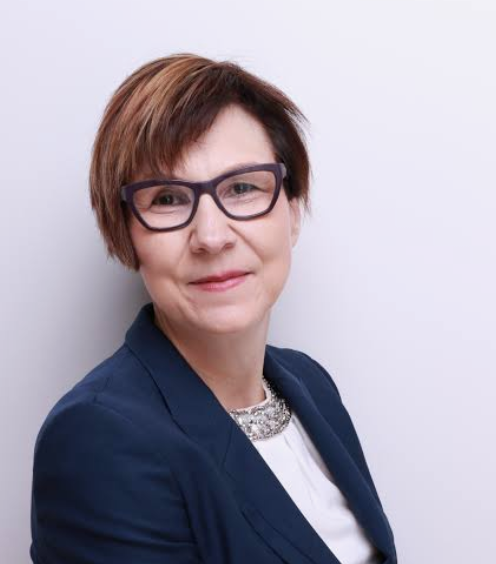
Cindy Blackstock
CHILD WELFARE…. SOOO CLOSE
Indigenous Child welfare has historically been run by the provinces and has, in general, despite some wonderful people, the results have not been good. For the past many years, a solution to this has been spearheaded by Cindy Blackstock of The Caring Society. It has been an enormous effort; however, they have still not reached an agreement with the Federal Government. About a year ago, an agreement was almost reached; however, at the last moment, it was rejected by the Indigenous community.
What is clear is that control will be in the hands of the Indigenous community and will be funded on an equitable basis, so that every child, as much as possible, will have virtually the same care as every other. Once the agreement is signed, however, do not expect immediate positive results.
PRISONS: HOPE
While there have been improvements in many areas, the percentage of people in prisons who are Indigenous has increased from 18% in 2000 to 32% in 2023. The reasons for this are many and not unique to Canada. They are due to a combination of historical, social, economic and justice systems.
While programmes in the prisons have improved and take into account Indigenous culture, I suspect the underlying prison system will not change unless there are improvements in the child welfare system and underlying systemic causes, as well as a continuing improvement in education. While the stats are not improving, all I can say is the problem is being worked on and with good intent.
WATER OUT OF THE NEWS
The good news is over 150 long-term advisories have been lifted since 2015, and the issue is mainly out of the news, but there are still 40 that are being discussed and worked on. The obstacle for many is a lack of long-term funding, and many are stuck in construction delays. My observation is that much of the problem lies internally with the government rules, regulations and procedures.
IN SUMMARY
While Canada is ahead of many countries in the world in relation to improving the world for Indigenous Peoples, progress is moving slowly. We are reminded every day of ongoing problems and conflicts ranging from sovereignty issues to suicides to discriminatory treatment.
While it will still take many years to reconcile, I truly believe progress is being made. I have stated many times, reconciliation is not just a government or Indigenous responsibility; it is every Canadian’s responsibility. If you want to move it along, I suggest you take the initiative, meet some Indigenous Peoples, go to a pow wow, read an Indigenous story, talk about it with your friends, or make a donation to to an Indigenous non-profit group, such as HIP, who are working on reconciliation every day. https://honouringindigenouspeoples.com/hip-honouring-indigenous-peoples/donate/
Till next time,
Chris Snyder**
Climate optimist
* HIP (Honouring Indigenous Peoples is an equitable partnership between Rotarians and Indigenous Peoples, focusing on education, awareness, and the building of relationships. HIP programmes rely on individual donations to increase their capacity and facilitate programmes.
**Chris Snyder was the Founding Chair of Honouring Indigenous Peoples and is now Chair Emeritus.
If you like this blog, please share.
You May Also Like
Cambodia!
Getting Along and the Golden Rule
